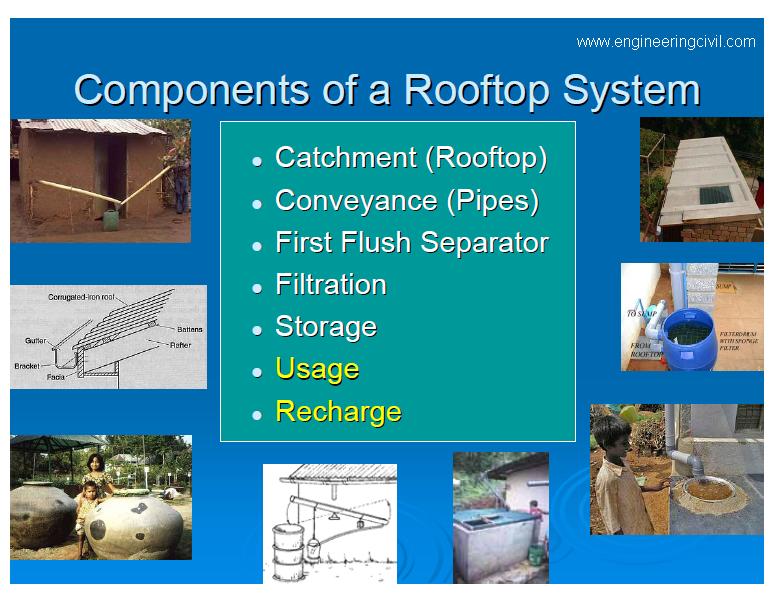
So a 50 x 20 roof is 600 x 240 multiply the roof dimensions by the number of inches of rainfall.
Physics of water running off a roof.
You have to admit that whether you re in a drought situation or not it s hard to pass up that much of a free thing.
Convert the percentage to a decimal by dividing the percentage by 100.
Count the number of downspouts coming from your roof.
In case you are too afraid to watch it this dude jumps off the top of a building that is listed at 129 feet and lands in water.
Divide 100 by the number of downspouts in order to obtain the percentage of water collected from each downspout.
If you can get in the attic and look you should be able to see where the water stained.
It consists of a hose full of water with one end in a water source and the other end pouring out into a destination that is below the source.
For a large roof it is recommended to have drains placed at multiple locations within the area of the roof.
Which have even more surface area for vapor to rise off of.
These techniques will minimize the amount of water that accumulates or that causes erosion in the problem area.
In this example 600 x 240 x 1 144 000 cubic inches of water divide by 231 to get the number of gallons because 1 gallon 231 cubic inches.
If you have heavy runoff from roof downspouts and neighboring properties redirecting or capturing runoff can provide better control.
A pocket of water gets trapped in the middle with nowhere to run and squirts out.
Automatic overflow control directs water back to downspout when barrel is full.
If you are afraid of heights this is a super scary video.
The following approaches to redirect and capture runoff can be used to control heavy runoff causing prolonged wet areas or yard erosion.
A siphon is a way to carry water uphill without the use of pumps.
The surprisingly strange physics of water.
The drainage system of any roof can be located at the edge or in the middle of the roof.
Determine the percentage of water collected from each downspout p.
A combination of gravity and atmospheric pressure drives the water through the hose even if parts of the hose.
How water runs off a roof depends on the amount of rainfall and how quickly it needs to drain.
More than like the water is leaking from a nail that popped up from the temperature changes over the years.
Without it water will spill off the roof and collect on the ground around your foundation eventually working its way inside causing expensive water and moisture damage.